We've recently updated our Terms of Service and Privacy Policy.

Local Search Engine Optimization (SEO) for small business is one of the most effective digital strategies for increasing visibility, attracting nearby customers, and building trust in your community. Unlike general SEO, which focuses on broad audiences, local SEO helps your business appear in the places where local consumers are already searching—Google Maps, local search results, and “near me” queries. Whether you run a service business, a retail store, a restaurant, or a local practice, mastering local SEO is essential for sustained growth. In this article, we’ll walk through everything you need to know to boost your local rankings, strengthen your online presence, and outperform competitors in your area.
Local customers rely on search engines to find products and services near them. Google has confirmed that nearly half of all searches have local intent, and the majority of those result in real-world actions such as calls, in-store visits, or appointments. When your business appears prominently in local search results, you get more visibility, more traffic, and stronger brand trust.
Local SEO also ties closely to trust and credibility—concepts explored in What Makes a Website Trustworthy. A business that appears consistently across platforms, has strong reviews, and offers accurate information is more likely to earn customer confidence and trust.
Strong local SEO also reinforces your broader online presence. It contributes to better website performance, improved search visibility, and higher-quality leads coming inbound to your business. For many small businesses, local SEO is the most profitable and sustainable digital marketing strategy available.
Local SEO relies on relevance, distance, and prominence. These are the three factors that determine how your business ranks in local search results.
How well your business matches the user’s search query.
How close your business is to the user’s physical location.
How well-known, trusted, and active your business appears online.
Your goal is to optimize your digital presence so that Google sees your business as the most relevant, credible, and trustworthy option in your area.
Your Google Business Profile (GBP) is one of the most powerful tools for improving local SEO. This listing determines how your business appears on Google Maps and local search results. Without proper optimization, you miss out on high-intent customers searching nearby.
For a deeper walkthrough on the setup process, see How to Get Your Business Listed on Google.
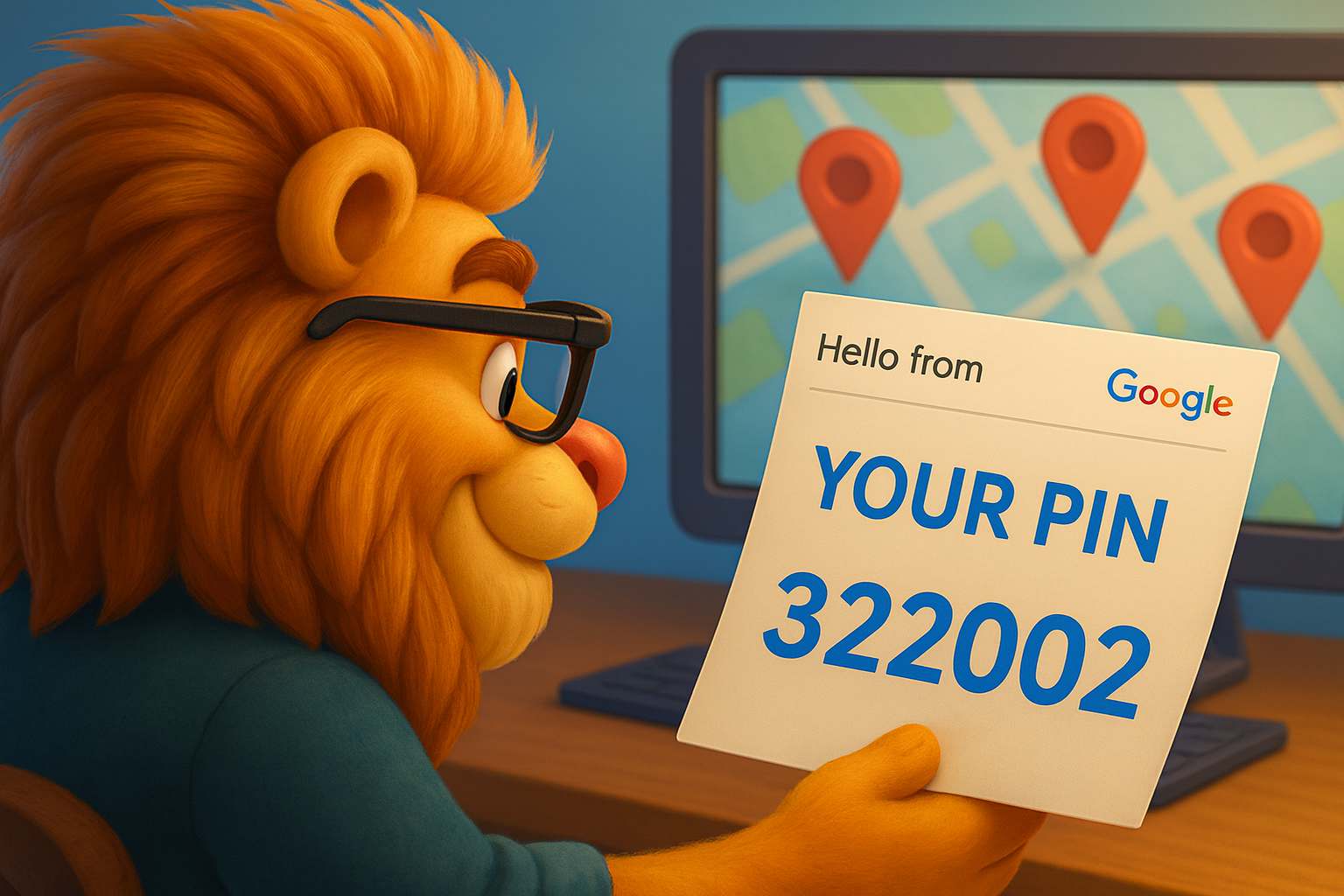
Verification is essential, not to mention required. Without verification, your business cannot publish updates, respond to reviews, or appear fully in search results.
Google prioritizes complete profiles. Missing details weaken relevance and can significantly reduce visibility.
Doing the above shows professionalism and improves trust signals across the Google network.
Your business description should be clear, keyword-relevant, and customer-focused.
Avoid stuffing keywords or repeating phrases unnaturally. Google understands this is a strategy, and it will no longer help your SEO efforts. It may now contribute to your business being suppressed in search results.
Your primary category should represent your core service. Secondary categories help differentiate offerings.
Primary: “Plumber”
Secondary: “Emergency plumber,” “Drainage service,” “Water heater installation”
Categories influence which features appear on your profile, such as appointment scheduling or menu listings.

Businesses with photos receive significantly more actions and direction requests.
Visuals help customers understand what to expect and improve engagement metrics.
NAP stands for Name, Address, Phone Number. Consistency across all directories and platforms is essential for local rankings.
Google cross-checks business listings across the web. If your information is inconsistent, outdated, or inaccurate, it weakens trust and relevance.
Inaccurate citations lead to confusion and reduce local search performance. Remember, Google wants the searcher to have the best experience possible. If the searcher can be confused by your online footprint, you need to improve.
Local citations are mentions of your business name, address, and phone number across the web. They serve as trust signals to Google, reinforcing legitimacy and geographic relevance.
Consistency remains key. Always use identical formatting for your business information.
Local SEO requires a strategic blend of service keywords and geographic keywords.
Once selected, incorporate these keywords into location pages, service pages, and your Google Business Profile posts. Make sure you are doing so intentionally and not purely stuffing keywords though.
Local landing pages (also called “location pages”) are essential for ranking in multiple cities or neighborhoods. They help you target users searching in specific areas.
Avoid copying and pasting the same content for each city.
Use local modifiers throughout the page.
Build credibility with customer feedback from that location.
Displays your physical location or service area.
Helps search engines understand your business details.
Example: “Schedule a free consultation in Denver.”
Local landing pages also need to load quickly and follow UX best practices—concepts connected to How to Improve Website Performance.
To appear at the top of Google Maps results (the “Map Pack”), your business must optimize for several key ranking factors.
Strong performance in these areas increases your likelihood of ranking in the top 3 map results—where the majority of customer actions occur.
Reviews influence both rankings and conversions. Businesses with numerous, high-quality reviews tend to outperform competitors in both visibility and trust.

Reviews are a major prominence factor.
Social proof builds confidence.
Customers trust peer experiences.
Stars in search results attract more clicks.
After a successful appointment or purchase.
Email and text campaigns can simplify the process.
Provide a direct link to your Google review page.
Positive or negative, your response shows professionalism.
Violates Google policies and risks penalties.
Reviews also reinforce trust—another theme found in What Makes a Website Trustworthy.
Strong local content signals expertise, relevance, and authority in your community. It also attracts organic search traffic.
Local content attracts both search engines and, in turn, customers.

Most local searches happen on mobile devices. A slow, poorly optimized site frustrates users and reduces rankings.
Mobile performance is closely tied to the guidance found in How to Improve Website Performance.
Mobile-first indexing means Google primarily uses the mobile version of your website to determine rankings.
Local backlinks improve prominence and authority. Focus on high-quality, local sources.
Avoid low-quality, spammy directories. Focus on relevance and authority.
Schema markup is structured data added to your site to help Google understand your business.
Schema can enhance search features, such as review stars or FAQs.
Monitoring results ensures your strategy is working and helps you identify new opportunities.
Track KPIs monthly, including:
Local SEO for small businesses is not a one-time task. SEO is an ongoing commitment to improving visibility, strengthening trust, and delivering accurate, helpful information to nearby customers. By optimizing your Google Business Profile, building citations, creating strong local content, managing reviews, and maintaining technical performance, you build a foundation for long-term success.
Local SEO ensures that when customers in your area need what you offer, your business is the one they see first.
We’ll give you a call to set up time for your team and ours to meet virtually for a personalized demo.
Book a Demo


.png)
%20(1).png)
.svg)
.svg)



.png)
