We've recently updated our Terms of Service and Privacy Policy.

“Can’t the marketing team just handle the SEO?”
It’s a reasonable question. You’re hiring professionals for a reason. You expect them to research, write, optimize, and improve visibility without needing to pull you away from running the business.
And they should absolutely lead that work.
But here’s the part that often surprises people: your SEO results depend heavily on information that only you can provide.
Not because the agency isn’t skilled. Not because tools aren’t powerful. But because Google increasingly rewards something deeper than optimization tactics. It rewards credibility, experience, and real expertise, which is often referred to as EEAT.
Let’s break that down clearly.
EEAT stands for:
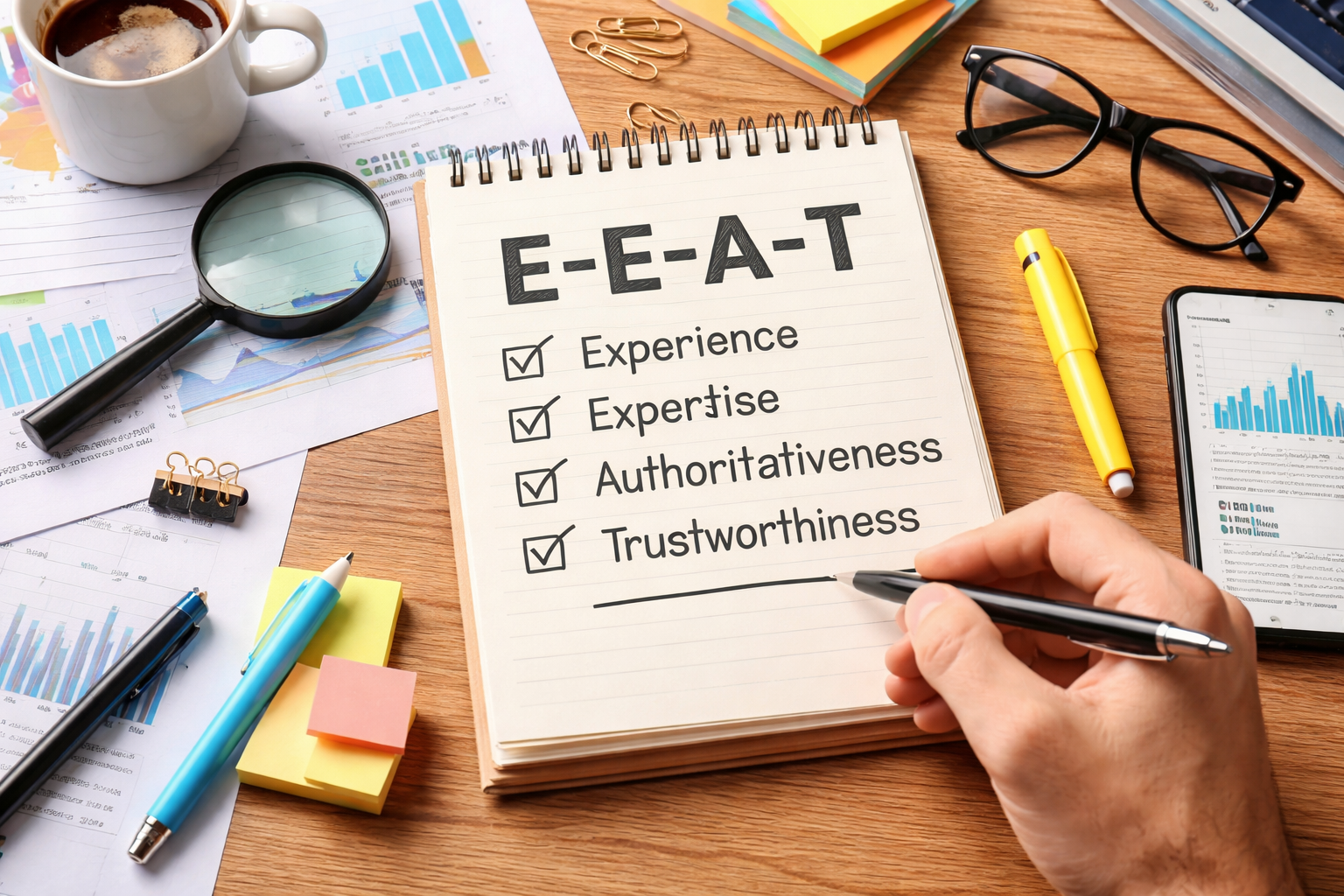
In simple terms, Google is trying to answer one big question:
“Is this content written by someone who truly knows what they’re talking about?”
Search engines have become very good at identifying surface-level content, articles that sound polished but don’t say anything original. Generic summaries don’t perform like they used to.
What performs now?
That kind of depth doesn’t come from keyword tools. It comes from you.
A few years ago, SEO content often meant answering a question in the most straightforward way possible and repeating the right phrases.
Today, that approach falls flat.
Imagine two roofing companies writing about “How to Choose a Roofing Contractor.”
One article lists obvious tips: check reviews, verify insurance, compare quotes.
The other explains:
Which one feels more credible?
The second article reflects lived experience. That’s what search engines reward, and what readers trust.
If you’ve ever wondered why competitors sometimes outrank you even when your site “looks better,” it often comes down to depth and authority, not design alone.
Here’s what your marketing team can’t invent:
That information lives in your sales calls, service conversations, and daily work.
Without it, content stays general.
With it, your website becomes genuinely helpful.
For example, a financial advisor can say, “We help clients prepare for retirement.” That’s broad.
Or they can explain:
Those insights don’t come from research alone. They come from years of experience.
That’s EEAT in action.
Redesign projects are where this becomes especially important.
When companies rewrite their websites without incorporating real expertise, they often strip out the depth that made their content valuable in the first place. That’s one reason people worry about losing rankings during a redesign.
A strong redesign doesn’t just modernize visuals. It strengthens clarity, authority, and usefulness.
That requires collaboration.
The best-performing websites aren’t written in isolation. They’re built from real conversations with founders, service leaders, and subject-matter experts.
Experience and expertise matter. But trustworthiness might matter even more.
Trust shows up in:
Even format plays a role. Adding video explanations, for example, can increase perceived credibility because people see and hear you directly.
And consistent educational content over time builds authority gradually.
Google isn’t just measuring keywords. It’s evaluating signals that indicate whether a business is legitimate and knowledgeable.
That can’t be outsourced entirely.
This is another common hesitation.
You don’t need to become a blogger.
You don’t need to draft full articles.
What you do need is to share your thinking.
That might look like:
Your role isn’t to write perfectly. It’s to provide substance.
A strong content strategy captures your insights and translates them into clear, structured content. When done well, your involvement feels focused and efficient, not overwhelming.

EEAT isn’t a quick tactic. It’s a long-term positioning strategy.
When your website consistently demonstrates real expertise:
Anyone can replicate design.
Anyone can mimic surface-level keywords.
They can’t replicate your experience.
That’s why SEO today is less about technical tricks and more about clarity, depth, and credibility.
If you want a deeper overview of how this fits into a broader growth plan, our guide to content strategy and website SEO breaks down how everything works together.
At Levitate, we don’t expect business owners to become marketers.
We guide structured conversations that draw out the knowledge you already have, the stories, patterns, lessons, and insights that make your company different. Then we shape that into clear, helpful website content built for both people and search engines.
Our website services are designed to support this kind of depth, making it easier to build authority over time rather than chasing short-term ranking spikes. Explore Levitate websites on our features page.
If you’d like to see what this approach could look like for your business, book a tailored demo with a Levitate product expert today.
We’ll give you a call to set up time for your team and ours to meet virtually for a personalized demo.
Book a Demo


.png)
%20(1).png)
.svg)
.svg)