We've recently updated our Terms of Service and Privacy Policy.

As we move deeper into 2026, businesses are increasingly turning to bespoke websites to stand out in a crowded digital landscape. These customized digital experiences go beyond attractive design. They focus on delivering meaningful interactions that reflect a brand’s identity and guide visitors toward action.
A well-crafted website does more than look good. It helps build trust, strengthen relationships, and convert visitors into loyal customers.
The internet is filled with millions of websites, but the ones that leave a lasting impression are those designed with a specific audience in mind.
Personalization allows a website to speak directly to the needs, preferences, and expectations of its visitors. When users feel that a website understands their goals and challenges, they are far more likely to engage with its content and explore further.
Personalized web design helps:
When every element of a website is designed with the user experience in mind, visitors are more likely to stay, interact, and ultimately take the next step.
Attention spans online are shorter than ever. Capturing interest within the first few seconds is essential.
Bespoke websites create a more engaging experience by tailoring layout, messaging, and content to the audience they serve. Instead of feeling generic, the website feels intentional and relevant.
This level of customization helps visitors feel understood and valued, which is essential for building long-term relationships with your audience.
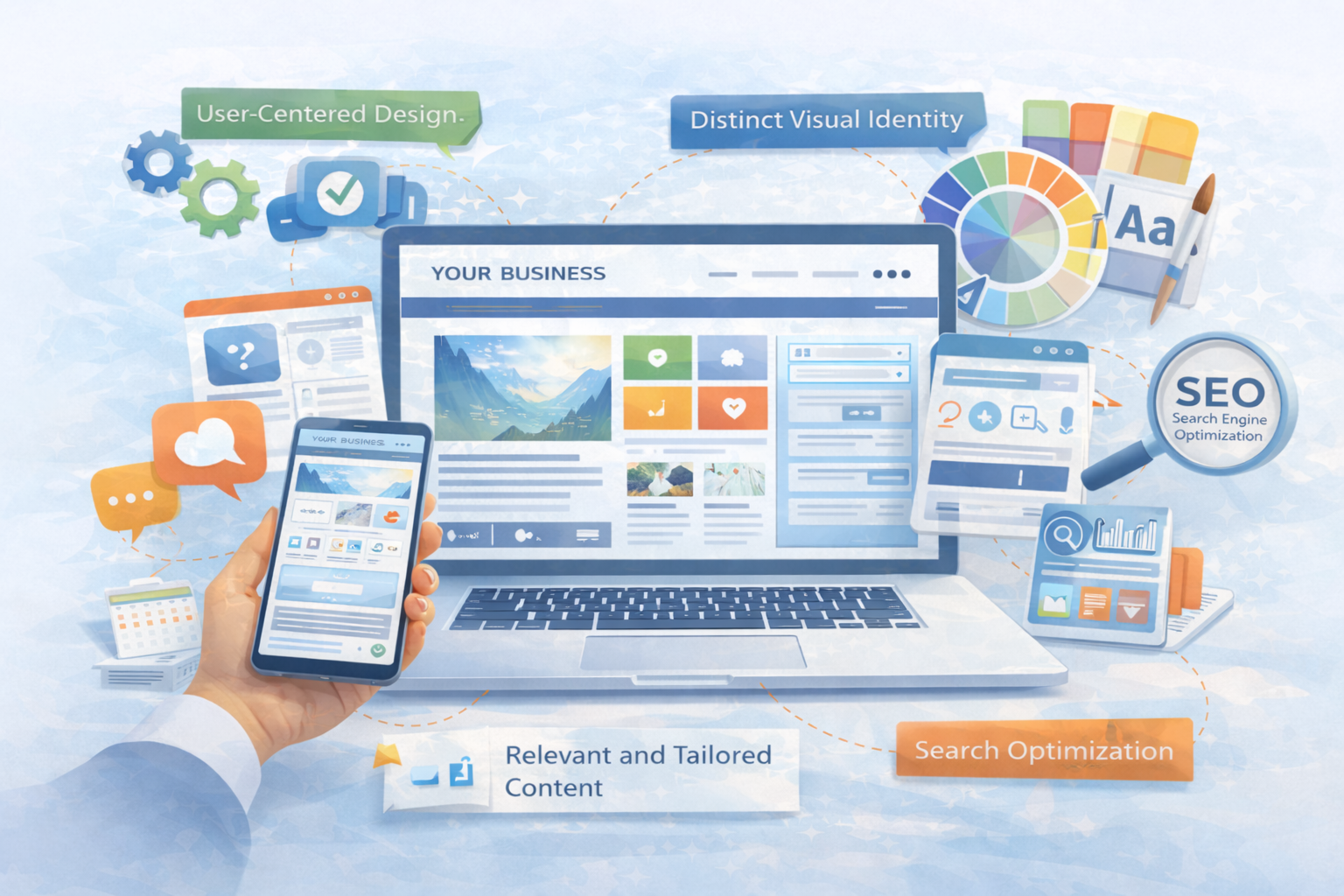
Creating a bespoke website requires more than selecting a template and adding content. It involves translating the essence of a brand into a digital experience that feels authentic, functional, and memorable.
Several core elements form the foundation of a successful bespoke website.
User-Centered Design
A strong website prioritizes the visitor experience. This includes intuitive navigation, responsive design across devices, and fast loading speeds. Every design decision should make the website easier and more enjoyable to use.
Distinct Visual Identity
Your website should visually reflect your brand. This includes a cohesive color palette, consistent typography, and imagery that communicates your brand’s personality and values. Custom graphics and professional visuals help create a polished and recognizable identity.
Relevant and Tailored Content
Content should speak directly to the interests and needs of your audience. Whether through blog posts, service pages, or multimedia content, your messaging should provide value and clearly communicate how your business helps solve problems.
Interactive Features
Interactive elements can significantly increase engagement. Features like quizzes, chat tools, appointment scheduling, or dynamic product displays encourage visitors to interact with your site rather than simply browse.
Search Engine Optimization
Even the most visually impressive website needs strong SEO to be discovered. Optimizing site structure, keywords, and technical performance helps ensure your website appears in search results when potential customers are looking for solutions you provide.
To better understand the impact of bespoke web design, consider how different businesses might approach personalization.
Professional Services Firm
A consulting firm may build a website that highlights case studies, client testimonials, and educational resources. Clean design and thought leadership content help position the firm as a trusted expert.
Home Services Company
A local home services company may focus on easy scheduling, project galleries, and customer reviews. Visual examples of completed work and simple booking tools help convert website visitors into new clients.
Nonprofit Organization
A nonprofit website may focus on storytelling and impact. Personal stories, donation tools, and volunteer opportunities help supporters understand the mission and feel motivated to get involved.
While the industries differ, each site is tailored to meet the expectations and needs of its specific audience.
Despite the benefits, developing a bespoke website can present several challenges.
Balancing Creativity and Functionality
Creative designs must still remain practical and user-friendly. A visually striking website should never come at the expense of usability.
Time and Resource Investment
Custom websites typically require more planning, collaboration, and development time than template-based solutions.
Keeping Up With Technology
Web design trends and technologies evolve quickly. Maintaining a modern, responsive website requires staying informed about new tools and best practices.
Performance and SEO Optimization
Highly customized websites must still maintain fast load speeds and strong search engine performance, which requires careful technical planning.
Although these challenges exist, thoughtful planning and collaboration can make the process much smoother.
Skilled designers and developers bring valuable technical knowledge and creative insight. Their expertise helps transform a vision into a website that is both visually compelling and highly functional.
Before beginning the design process, define your goals, target audience, and key messages. A clear strategy ensures that every element of the website supports your broader business objectives.
User testing and feedback can help identify areas where navigation or content can be improved. A website that is easy to use and intuitive will always outperform one that is confusing or cluttered.
Responsive frameworks, advanced content management systems, and SEO tools help improve both performance and scalability.
A website should evolve over time. Monitoring performance metrics, updating content regularly, and implementing improvements help keep the experience fresh and effective.
As digital competition continues to grow, personalized websites will become even more important. Businesses that invest in custom digital experiences are better positioned to build stronger relationships with their audiences and differentiate themselves in crowded markets.
A bespoke website is not simply a design project. It is a strategic investment in how your brand communicates, connects, and grows online.
Your website works best when it is part of a larger marketing strategy. Consistent content, regular communication, and strong audience engagement all play a role in turning visitors into long-term customers.
Levitate helps businesses maintain those connections by providing tools that support ongoing engagement through email marketing, social media, and personalized content.
With Levitate, you get:
Instead of managing marketing efforts across multiple tools, you can focus on building meaningful relationships with your audience.
If you want to strengthen your online presence and support your website with consistent, strategic communication, book a demo to see how Levitate can help.
We’ll give you a call to set up time for your team and ours to meet virtually for a personalized demo.
Book a Demo


.png)
%20(1).png)
.svg)
.svg)