We've recently updated our Terms of Service and Privacy Policy.

Small businesses are the backbone of the economy, providing unique products and services that large corporations often cannot replicate. However, growing a small business requires more than a great idea or product. It involves understanding your market, building strong customer relationships, and adopting strategies that help your business expand sustainably.
In 2026, small business owners face both new challenges and new opportunities. Businesses that focus on strategic growth, customer engagement, and operational efficiency will be best positioned to succeed.
A deep understanding of your market is essential for long-term success. Business owners must know not only who their customers are, but also what motivates their purchasing decisions.
Customers may prioritize factors such as:
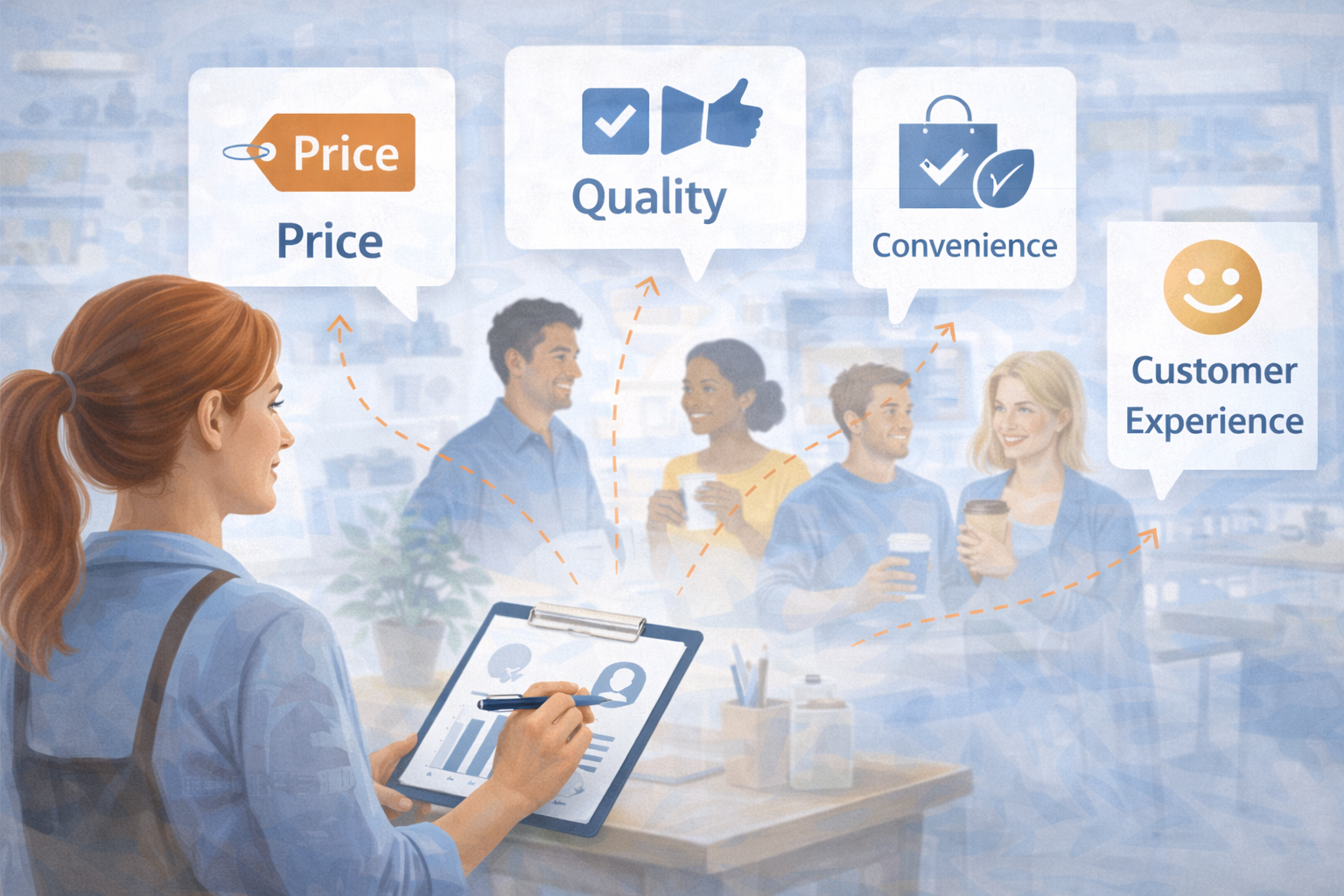
By identifying what matters most to your audience, you can tailor your offerings and marketing to meet those expectations.
For example, if you run a small coffee shop and discover that customers value ethically sourced beans, highlighting your sourcing practices can strengthen customer loyalty and attract new patrons who share those values.
Understanding your market allows you to make informed decisions that support both customer satisfaction and business growth.
A strong online presence is critical for attracting new customers and maintaining relationships with existing ones.
This does not mean your business needs to be active on every social media platform. Instead, focus on the platforms where your target audience is most active.
Your online presence might include:
For example, businesses can share behind-the-scenes content, customer success stories, or helpful tips related to their services. Providing valuable content helps build trust and positions your business as an authority within your industry.
Consistency and authenticity are key when developing an online presence that resonates with customers.
Customer feedback is one of the most valuable resources a small business can use to improve and grow.
Encouraging customers to share their experiences through surveys, reviews, or direct communication provides insight into what your business is doing well and where improvements can be made.
When customers see that their feedback leads to real changes, it strengthens their loyalty and trust.
For example, a restaurant that updates its menu based on customer preferences shows that it values its patrons' opinions. This responsiveness creates stronger relationships and encourages customers to recommend the business to others.
Listening to customers and continuously improving based on their input can lead to better service and stronger long-term growth.
Strategic partnerships can create opportunities that may be difficult to achieve independently.
Partnering with businesses that complement your services can help both organizations expand their reach and provide additional value to customers.
For example:
These partnerships allow businesses to tap into new audiences while offering useful benefits to their existing customers.
When forming partnerships, it is important to ensure that both businesses share similar values and brand standards. A well-aligned partnership can strengthen your brand and increase customer trust.
Innovation is not limited to technology companies. Small businesses can also benefit greatly from adopting new tools and processes that improve efficiency and customer experience.
Examples of innovation for small businesses include:
For instance, a retail store that introduces online shopping can expand its customer base while offering added convenience to existing shoppers.
Adopting modern tools helps businesses remain competitive and adapt to changing customer expectations.
Sustainable growth requires careful financial planning. Monitoring cash flow, managing expenses, and maintaining healthy profit margins are essential for long-term success.
Without proper financial planning, rapid growth can create unexpected challenges.
For example, a sudden increase in demand might tempt a business to expand too quickly. Without adequate financial preparation, this could lead to excessive inventory, rising debt, or operational strain.
Maintaining a strong financial plan ensures your business can grow responsibly while remaining prepared for unexpected changes.
Employees play a critical role in the success and growth of a small business. When employees feel valued and supported, they are more motivated, productive, and committed to delivering excellent service.
Businesses can strengthen employee engagement by:
For example, a retail store that invests in employee training improves customer service while also increasing employee confidence and job satisfaction.
Engaged employees create better customer experiences, which ultimately contributes to business growth.
Growing a small business in 2026 requires a well-rounded strategy that combines market awareness, strong customer relationships, operational efficiency, and financial discipline.
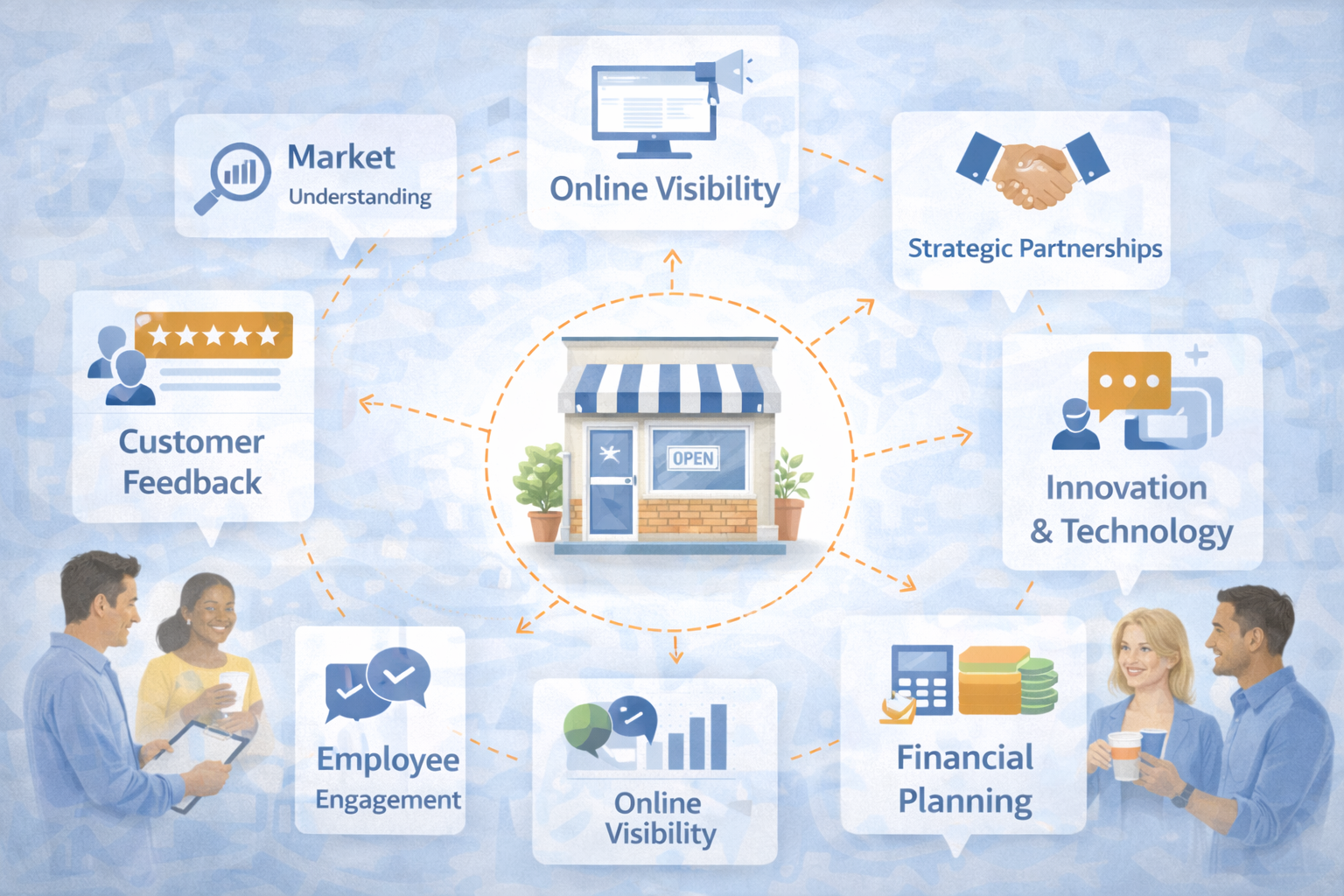
By focusing on:
Small businesses can build a sustainable path toward long-term success.
Levitate helps small businesses implement marketing strategies by simplifying communication and relationship management. With tools designed for email marketing, social media scheduling, customer engagement, and online presence building, Levitate helps businesses stay connected with their audience while saving valuable time.
If you want to streamline your marketing and focus on growing your business, book a demo to see how Levitate can support your growth strategy.
We’ll give you a call to set up time for your team and ours to meet virtually for a personalized demo.
Book a Demo


.png)
%20(1).png)
.svg)
.svg)