We've recently updated our Terms of Service and Privacy Policy.

Understanding the best times to post on Facebook and Instagram can significantly improve your reach, engagement, and overall social media performance. While great content is essential, timing plays a role in whether that content is actually seen. Posting when your audience is most active increases early engagement, which signals value to platform algorithms and helps your posts gain momentum. In this guide, we’ll break down optimal posting times based on industry trends, audience behavior, and time zones—while also showing you how to analyze your own data and test what works best for your business.
Social media platforms prioritize content that performs well very shortly after it’s published. When a post receives early likes, comments, shares, or saves, algorithms are more likely to distribute it to a wider audience.
Posting at the wrong time doesn’t mean your content is bad—it simply means fewer people were online to see it. Over time, consistently poor timing can limit reach and engagement, even if your content strategy is solid. This is why timing is a key component of the broader engagement strategies discussed in How to Increase Engagement on Social Media.

Both Facebook and Instagram use algorithmic feeds rather than chronological ones. While content quality and relevance matter most, posting time still influences performance.
Posting when your audience is online increases the chance of immediate interaction, which compounds visibility later down the line.
Facebook users tend to check the platform during breaks, lunch hours, and evenings. While exact timing varies by audience, consistent patterns emerge across industries.
Midday posting aligns well with work breaks and casual browsing. Weekends can still perform, but engagement is often less predictable.
Instagram usage is more frequent throughout the day, especially on mobile. Users often check Instagram in the morning, during breaks, and in the evening.
Reels and Stories may perform well outside these windows, but feed posts typically benefit from these timeframes.
While general guidelines are helpful, the best posting time ultimately depends on your specific audience.
This is why relying solely on generic posting charts is limiting. Testing and analytics are essential for long-term success. Many platforms allow you to see specific analytics for your follower base.

If your audience spans across multiple time zones, timing becomes more complex.
Post during peak local activity hours to maximize immediate engagement.
For businesses with national or regional audiences, posting slightly earlier in the day often captures multiple time zones more efficiently.
Your platform analytics provide the most accurate insight into when your audience is active.
Navigate to:
Look for data on:
Access via:
Review:
Tracking these metrics allows you to move from assumptions to data driven decisions.
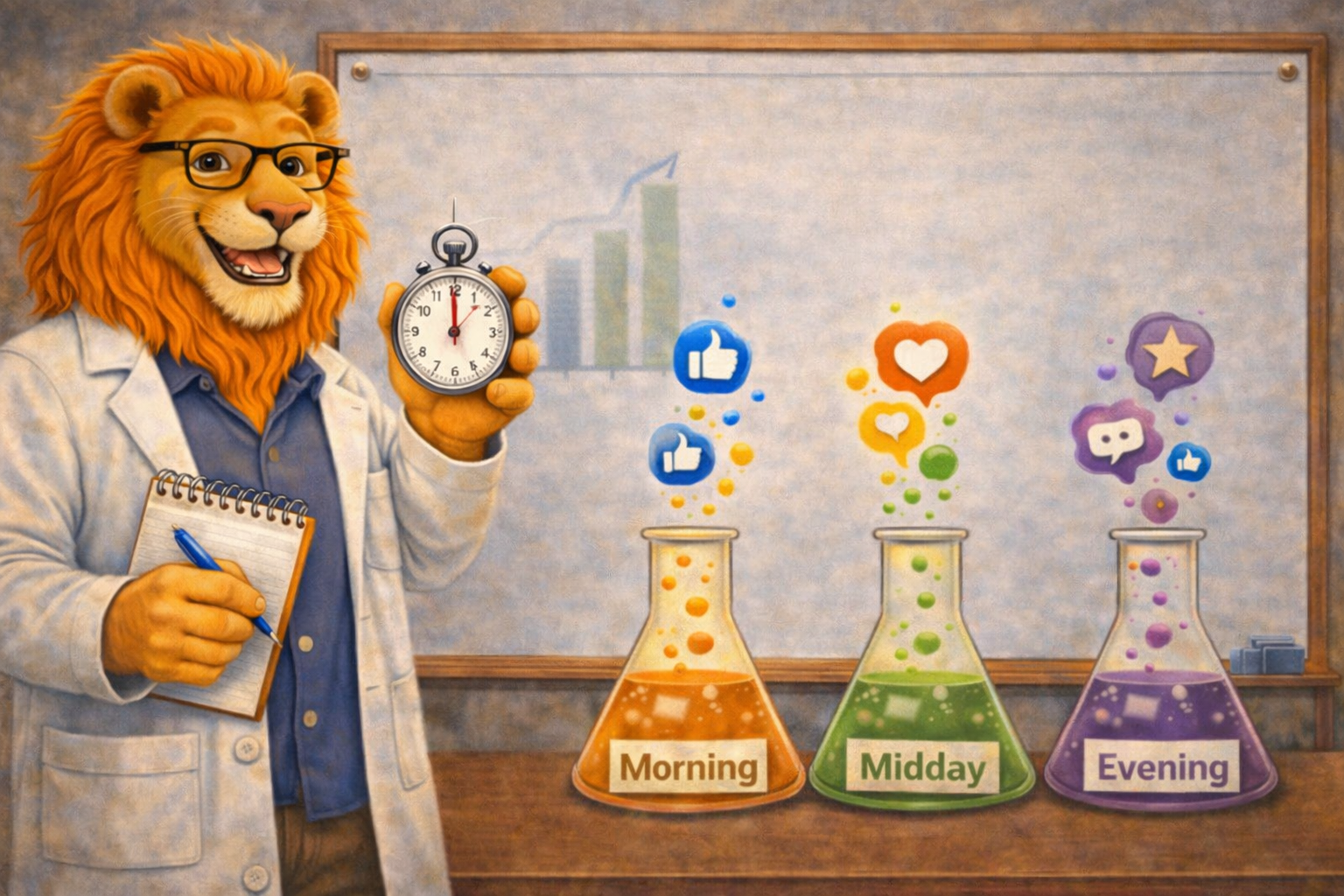
Testing is the most reliable way to determine optimal posting times.
Keep variables consistent. Changing content type and timing at the same time muddies results.
Likes alone don’t tell the full story. Use a combination of metrics.
Look for trends rather than one-off spikes.
Timing works best when paired with a consistent posting schedule.
Posting too infrequently reduces data reliability, while posting too often can dilute engagement.
A structured approach like the one outlined in How to Create a Social Media Content Calendar makes consistency easier to maintain.
Adjust timing slightly based on content format.
Different industries have different engagement patterns.
Understanding your audience’s daily routine is just as important as following general data.
Posting at the right time amplifies good content, but it cannot compensate for weak strategy. Timing should support, not replace, strong content planning.
Timing works best when combined with:
These elements are covered in more depth in Social Media Marketing for Small Business.
Many businesses hurt performance with avoidable errors.
Avoiding these mistakes helps ensure your content has the best chance to perform.

Once you identify strong time windows, document them and build them into your workflow.
A sustainable schedule reduces decision fatigue and improves long-term performance.
The best times to post on Facebook and Instagram are not fixed—they depend on your audience, content, and consistency. While general benchmarks provide a useful starting point, real success comes from analyzing your own data, testing deliberately, and refining your approach over time.
When timing is aligned with strong content and engagement strategy, your posts reach more people, spark more interaction, and support long-term growth across both platforms.
We’ll give you a call to set up time for your team and ours to meet virtually for a personalized demo.
Book a Demo


.png)
%20(1).png)
.svg)
.svg)



.png)
