We've recently updated our Terms of Service and Privacy Policy.

In today’s digital landscape, your veterinary practice’s website is often the first place pet owners interact with your brand. It’s more than just an online presence. It’s a powerful tool that helps build trust, communicate your expertise, and connect with pet owners who are searching for care.
An effective veterinary website should do more than look good. It must also be functional, easy to navigate, and designed to guide visitors toward taking action. In 2026, successful veterinary website design combines visual appeal with practical features that create a smooth and engaging experience for pet owners.
When visitors land on your website, you have only a few seconds to make a strong impression. Your homepage should instantly communicate that your practice is professional, welcoming, and trustworthy.
A clean layout and intuitive navigation help users quickly find the information they need. Important details such as your services, location, and contact information should be easy to locate.
Clear calls-to-action can also guide visitors toward the next step. Buttons like “Schedule an Appointment” or “Contact Our Team” encourage potential clients to engage with your practice.
Trust plays a critical role in veterinary care. Pet owners want to feel confident that their animals are in capable and compassionate hands.
Your website design should reinforce that trust. High-quality photos of your team and facility can help visitors feel more comfortable before they even step into your clinic.
Displaying client testimonials and reviews also helps build credibility. Positive feedback from other pet owners reassures new visitors that your practice provides reliable and caring service.
An effective veterinary website must offer a smooth and intuitive user experience. Visitors should be able to navigate your site easily and find information without frustration.
Important sections such as services, contact information, and appointment scheduling should be accessible from the homepage.
Mobile optimization is also essential. Many pet owners search for veterinary services on their phones, so your website should be fully responsive and easy to use across all devices.
Fast loading times and simple navigation can significantly improve the overall user experience.
Content plays an important role in helping veterinary practices connect with pet owners. Providing helpful and educational information can position your clinic as a trusted resource.
Consider including a blog where you share articles about:
This type of content not only helps build trust but also supports your search engine visibility.
When writing website content, use clear and approachable language. Avoid complex veterinary terminology that may confuse pet owners. The goal is to educate and reassure visitors.
As technology continues to evolve, visitors expect websites to offer convenient and interactive features.
In 2026, veterinary practices can enhance the user experience by including features such as:
These features streamline communication and make it easier for pet owners to interact with your practice.
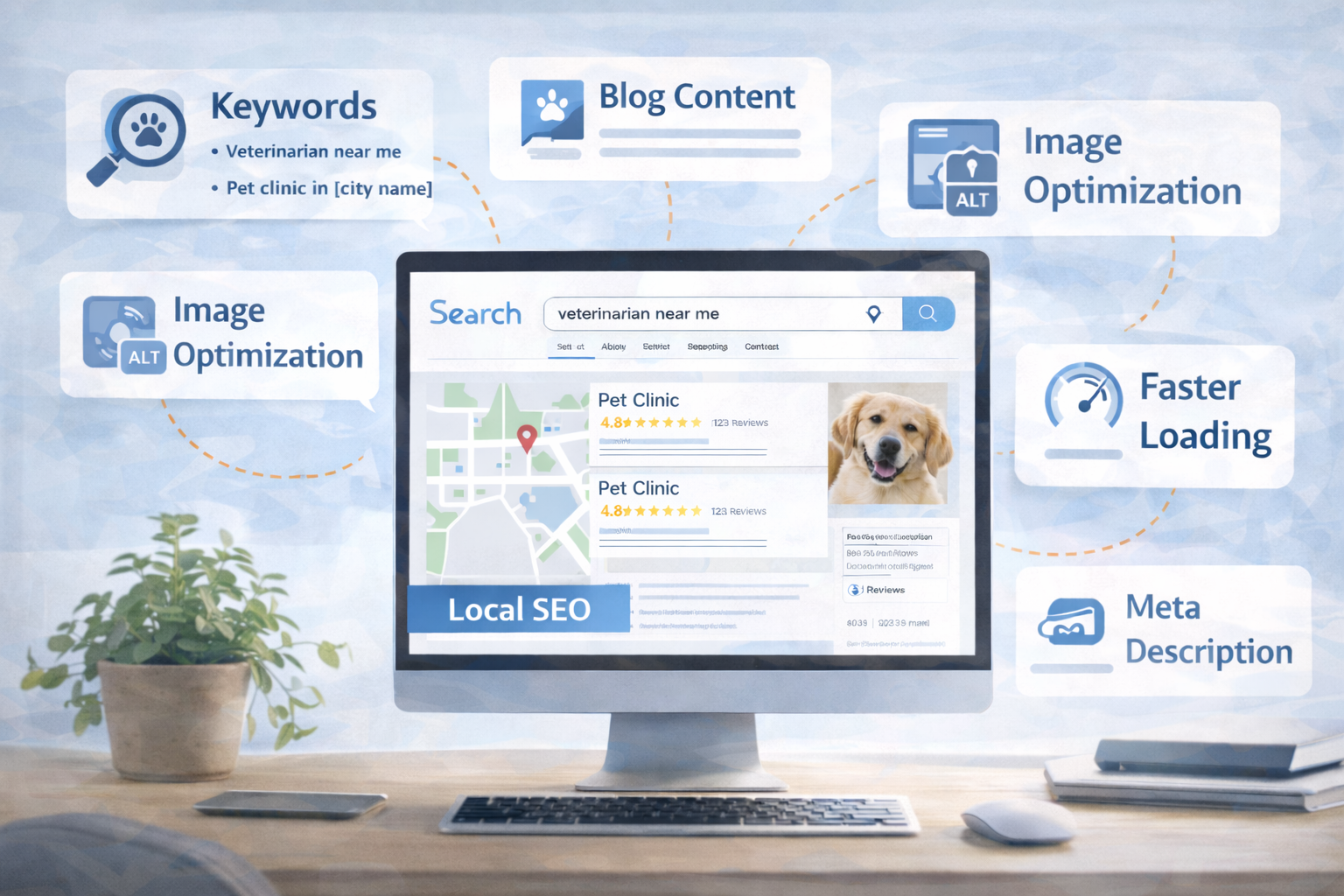
Even the most well-designed website needs strong search engine optimization (SEO) to be discovered by potential clients.
Optimizing your website helps your practice appear in search results when pet owners look for veterinary services.
Important SEO strategies include:
Local SEO is particularly important for veterinary practices. Ensuring your Google Business profile is updated and encouraging client reviews can significantly improve local search visibility.
Website analytics can provide valuable insights into how visitors interact with your site.
Analytics tools can show you:
Understanding this data allows you to make informed improvements to your website design and content.
For example, if visitors frequently leave a certain page quickly, it may indicate the content needs to be clearer or the design needs adjustment.
Website security is increasingly important as more interactions happen online. Protecting client data should always be a priority.
Installing an SSL certificate encrypts information shared through your website and helps build trust with visitors.
Regularly updating your website’s software, plugins, and security settings helps prevent vulnerabilities and ensures your site remains safe and reliable.
Accessibility ensures that all visitors can easily use and navigate your website.
Following accessibility guidelines helps make your website usable for individuals with visual, physical, or cognitive challenges.
Some important accessibility practices include:
An accessible website not only expands your reach but also demonstrates your commitment to serving the entire community.
Strong visuals can help your website feel welcoming and memorable.
Professional photography and short videos can showcase your clinic, introduce your staff, and highlight the care you provide to pets.
A virtual tour of your facility or short video clips of your team interacting with animals can help potential clients feel more comfortable before their first visit.
Visual storytelling helps build emotional connection and reinforces the compassionate environment of your practice.
An effective website is just one part of maintaining strong relationships with pet owners.
Levitate helps veterinary practices stay connected with clients through consistent communication and marketing tools designed to simplify outreach.
With Levitate, you can:
If you want to improve your practice’s online engagement and client communication, book a demo to see how Levitate can support your veterinary practice.
We’ll give you a call to set up time for your team and ours to meet virtually for a personalized demo.
Book a Demo


.png)
%20(1).png)
.svg)
.svg)



.png)
