
Why Client Retention Is More Profitable Than Client Acquisition
April 13, 2026 · Updated November 13, 2026


Marketing Specialist II
Client retention is more profitable because keeping a client usually costs far less than winning a new one, and long-time clients tend to renew, buy more, and send referrals. Research from Bain & Company links even small gains in retention to large gains in profit. You still need new clients, but the steadiest growth comes from caring for the ones you already have.
Why does client acquisition cost so much?
Winning a new client takes a lot of work before you earn a dollar. You pay for marketing, spend time on calls and proposals, and then prove your value from scratch during onboarding.
A current client already knows you. They understand how you work and trust you to deliver. That makes it easier and cheaper to serve them well and to keep them.
Is retaining a client really cheaper than finding a new one?
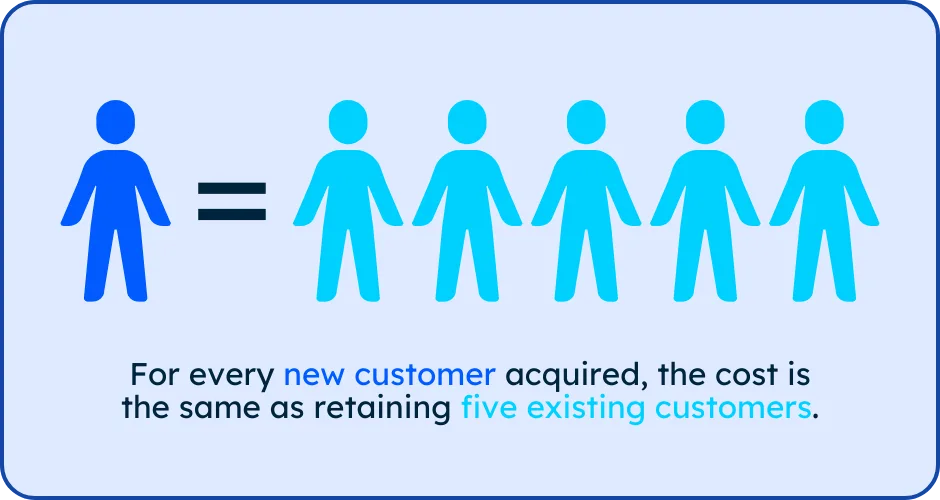
Usually, yes. In Harvard Business Review, Amy Gallo writes that, depending on the study and the industry, "acquiring a new customer is anywhere from five to 25 times more expensive than retaining an existing one."
The exact number depends on your business. The pattern holds for most service businesses, though: the client you already have is the cheapest one to keep growing with.
How much does a 5% increase in retention boost profit?
This is one of the most quoted (and misquoted) numbers in marketing, so here is exactly what the sources say.
Harvard Business Review cites research by Frederick Reichheld of Bain & Company, the inventor of the Net Promoter Score, showing that "increasing customer retention rates by 5% increases profits by 25% to 95%."
In Reichheld's own Bain article, "Prescription for cutting costs," the example is specific: "In financial services, for example, a 5% increase in customer retention produces more than a 25% increase in profit."
The takeaway for a small business: small, steady improvements in how many clients stay with you can have an outsized effect on your bottom line.
Why do loyal clients spend more over time?
Trust lowers the bar for saying "yes." Over time, loyal clients tend to:
- Renew, upgrade, or add services
- Say yes to related services you recommend
- Refer friends, family, and colleagues
Referrals matter a lot. In Nielsen's 2021 Trust in Advertising study, 88% of global respondents said they trust recommendations from people they know more than any other channel. A happy client who talks about you is some of the best marketing you can get.
All of this raises each client's lifetime value, which is the total revenue a client brings in over the full relationship. Higher lifetime value also makes your revenue more predictable.
Should you focus on retention or acquisition?
Both. You need new clients to grow, and you need to keep them so that growth sticks. Businesses that only chase new leads often end up refilling a leaky bucket.
A balanced plan means you keep marketing to new prospects while you:
- Follow up with current clients on a regular schedule
- Share helpful information, not just sales pitches
- Check in at key moments like renewals, anniversaries, and life changes
- Show your value during quiet stretches, not only when it's time to bill
For more on this, see how to build stronger client relationships and get more from your email marketing.
How do you nurture client relationships for the long term?
Long-term relationships come from showing up consistently, not from one big gesture. A few habits make the biggest difference:
- Make onboarding personal. A welcome note and a quick check-in after the first few weeks set the tone for the whole relationship.
- Keep a simple contact rhythm. Decide how often each client should hear from you, like a monthly email, a quarterly call, and a yearly review.
- Remember the details. Note birthdays, kids' names, business milestones, and what each client cares about, then use those notes when you reach out.
- Mark the milestones. Client anniversaries, renewals, and big life events are natural reasons to reach out that don't feel salesy.
- Ask for feedback. A short survey or a direct "How are we doing?" shows you care and catches problems before a client leaves.
- Say thank you. Thank clients for referrals, reviews, and loyalty, in writing when you can.
The goal is to be helpful and present without crowding anyone's inbox. Read more on how to stay top of mind with clients without over-communicating.
What are the warning signs a client might leave?
Clients rarely leave out of nowhere. Watch for:
- Slower replies or unanswered emails
- Skipped meetings or reviews
- Fewer questions or requests than usual
- A change in their life or business, like a move, new job, or new decision-maker
- Long gaps since your last real conversation
When you spot one of these, reach out personally. A simple note asking how things are going can turn a quiet client back into an engaged one. If you're not sure what to say, here's how to write a client check-in email that actually feels personal.

How does a relationship-based system make retention easier?
Retention isn't luck. It's showing up consistently and sincerely, which is hard when you're also running the business. A simple system helps you:
- Get reminders for check-ins and follow-ups
- Send personal messages without starting from a blank page
- Stay in touch without being pushy
- Keep giving value between renewals
The hardest part is usually knowing who needs attention today. Levitate's Keep in Touch Agent suggests who to reach out to, explains why, and gives you a starting message to edit and send, so no client slips through the cracks. Book a demo to see how it can help you keep more of the clients you've worked hard to win.
Frequently asked questions
What is client retention?
Client retention is your ability to keep clients doing business with you over time. It's often measured as the percentage of clients at the start of a period who are still with you at the end.
How do you calculate client retention rate?
Take the number of clients you have at the end of a period, subtract the new clients you added during that period, and divide by the number you started with. Multiply by 100 to get a percentage.
Is it really 5 to 25 times cheaper to keep a client?
Harvard Business Review reports that acquiring a new customer is "anywhere from five to 25 times more expensive" than keeping one, depending on the study and industry. Your own numbers may differ, so compare what you spend to win a client with what you spend to keep one.
What is the fastest way to improve client retention?
Reach out to current clients before they need something. A regular check-in, a thank-you note, or a quick feedback request shows you value the relationship and helps you catch problems early.
Does client retention help with referrals?
Yes. Clients who trust you are the most likely to recommend you, and people put a lot of weight on recommendations from people they know.