
Passive Fundraising Ideas for Nonprofits: Raise More, Stress Less
April 7, 2026 · Updated October 30, 2026


Director of Digital Marketing
Passive fundraising means setting up simple systems that bring in donations without a new ask each time. The best options are monthly giving, employer matching gifts, legacy gifts, and a donation link in every place supporters already see you. Set them up once, check on them a few times a year, and stay in touch so donors remember why they give.

What is passive fundraising?
Active fundraising, like events, campaigns, and phone calls, takes time and energy. For most nonprofits, that energy is already spread thin.
Passive fundraising fills the gaps. It gives supporters easy ways to give when it suits them, even when you aren't running a campaign.
It doesn't replace relationships. It depends on them. People give on their own to causes they already know and trust.
How do you start a monthly giving program?
Monthly giving is the most reliable passive fundraising idea, because one yes keeps working for months or years. A 2026 study of more than 4,000 nonprofits found that recurring donors were retained at 78% to 80%, compared with about 32% for one-time donors. The same study found that 58.6% of recurring donors started their gift without ever being asked.
To set it up:
- Put the monthly option near the top of your donation page. Many nonprofits make monthly the default choice.
- Tie each amount to something real. Show what a monthly gift pays for at your organization.
- Make it low-pressure. Say plainly that donors can change or cancel anytime.
Here is a simple line you can use:
"A small monthly gift helps us plan ahead and serve more families, year-round. You can change or cancel anytime."
Timing helps too. The same research found that October, November, and December are the top months for new recurring gifts, so add a monthly option to every year-end appeal. For page layout tips, see our guide on how to set up a donation page.
How can matching gifts double a donation?
Many employers match their employees' charitable gifts, but most donors never check. More than 26 million people work for companies with matching gift programs, and an estimated $4 billion to $7 billion in matching funds goes unclaimed each year.
Ask about matching gifts in three places:
- On your donation form. Add an optional "Employer" field.
- On your thank-you page and receipt. Remind donors their gift may be matched and tell them how to check. Our post on writing a donation receipt covers what else to include.
- In a follow-up email. Send a short note a week or two later with the steps to submit a match.
Try this line on your donation page:
"Many employers match donations. Check with your HR team to see if your gift could go twice as far!"
If you get a lot of online gifts, look for a matching gift lookup tool that connects to your donation form. It can tell donors right away if their employer matches.
Where should your donation link live?
Put it everywhere people already see you, so giving takes one click:
- Every staff email signature. Something short like "Support our mission: [donate link]"
- Your social media profile bios.
- Your website header, with a Donate button on every page.
- A QR code on printed pieces like flyers, event programs, and thank-you cards.
- Event and volunteer confirmation emails.
None of these feel like an ask, but they keep the door open all year.
Do shopping give-back programs still work?
Some do, but don't build your budget around them. AmazonSmile, the best-known program, shut down in February 2023.
Look closer to home instead. Some grocery stores and local businesses run community rewards or round-up-at-checkout programs that send money to local nonprofits. The dollars are usually small. The real value is that supporters see your name while they shop.
You can also post an online wish list of supplies supporters can buy and ship to you. Share sign-up steps once or twice a year with a short email or social post.
How do you invite legacy gifts without a big campaign?
Gifts left in a will are a big part of giving in the U.S. Bequests made up 10% of the $617.2 billion given to charity in 2025, and bequest giving grew nearly 20% that year, according to Giving USA 2026.
You don't need a formal program to start:
- Add a "Ways to Give" page that explains how to name your nonprofit in a will or as a beneficiary. List your legal name and tax ID.
- Add one line to thank-you notes or your email signature, such as "Have you included us in your will? Let us know so we can thank you."
- Point donors to their own attorney or financial advisor for the details.
Your most loyal everyday donors are often your best legacy prospects, so keep them close.
Can supporters fundraise for you on their own?
Yes, and many want to. Two easy ways to make it happen:
- Birthday and celebration fundraisers. Supporters can ask friends to give instead of buying gifts. Make a simple kit with a short mission blurb, a photo, and your donation link.
- Tribute and memorial gifts. Add an option on your donation form to give in honor or in memory of someone. Send a gentle note to the family letting them know a gift was made.
For more ideas that build on your community, see our list of types of fundraisers for nonprofits.
How do you keep passive giving going?
Passive giving still depends on people remembering you. Stay in touch between asks:
- Share stories and updates, not just requests.
- Thank donors personally, and quickly.
- Send short, personal emails from your own inbox to key supporters.
- Mark donors' giving anniversaries.
Then check your setup every few months. Test your donation link, update your email signatures, and follow up on monthly gifts that failed because of an expired card.
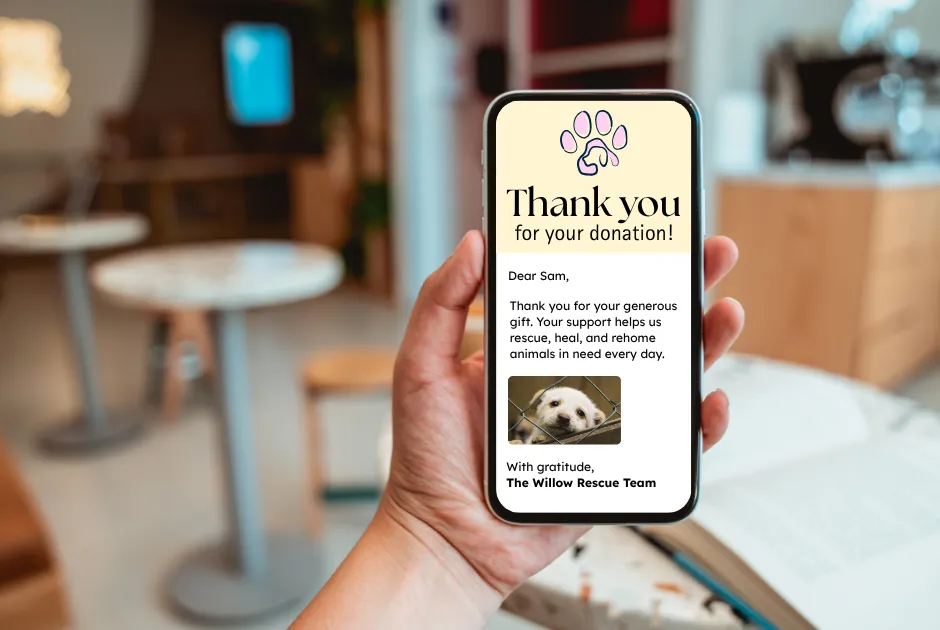
Passive giving holds up best when donors hear from you on time, every time. Levitate's email automations handle that for you, sending personal notes on birthdays and anniversaries and follow-ups after a gift, so thank-yous and matching gift reminders don't slip through the cracks. See how it works for nonprofits, or book a demo and we'll show you how to set it up for your donors.
Frequently asked questions
What is the easiest passive fundraising idea to start with?
A monthly giving option on your donation page. It takes an hour or two to set up, and each new monthly donor keeps giving without another ask.
Is passive fundraising worth it for small nonprofits?
Yes. Small teams have the least time for events and campaigns, so systems that bring in gifts on their own help the most. Start with one or two ideas and add more once those are running.
How do I tell donors about matching gifts without being pushy?
Mention it as helpful information, not a demand. A single line on your donation form, receipt, and one follow-up email is enough for most donors.
What happened to AmazonSmile?
Amazon ended AmazonSmile in February 2023. Local grocery and business give-back programs and online wish lists are the closest options today.