
Navigating Google Ad Grant Requirements in 2026: A Practical Guide for Nonprofits
April 1, 2026


Marketing Specialist
For nonprofits, visibility is everything, but budgets are often limited. Google Ad Grants offers a powerful solution, providing up to $10,000 per month in free search advertising.
The opportunity is significant, but so are the requirements. To get real value from the grant, you need to stay compliant and strategic.
Here is what nonprofits need to know to make the most of Google Ad Grants in 2026.
What Google Ad Grants Offers
Google Ad Grants gives eligible nonprofits access to $10,000 per month in Google Search ads.
This allows you to:
- Increase awareness of your mission
- Drive traffic to your website
- Promote donations, events, and programs
However, the grant is not a “set it and forget it” solution. Ongoing management is required to keep your account active and effective.
Eligibility Requirements
Before applying, make sure your organization qualifies.
Key requirements include:
- Verified nonprofit status (such as 501(c)(3) in the U.S.)
- An active Google for Nonprofits account through TechSoup
- A functional, content-rich website
- Compliance with Google’s non-discrimination and donation policies
Your website plays a bigger role than many organizations expect. If it lacks clarity or depth, approval and performance will suffer.
Staying Compliant With Program Rules
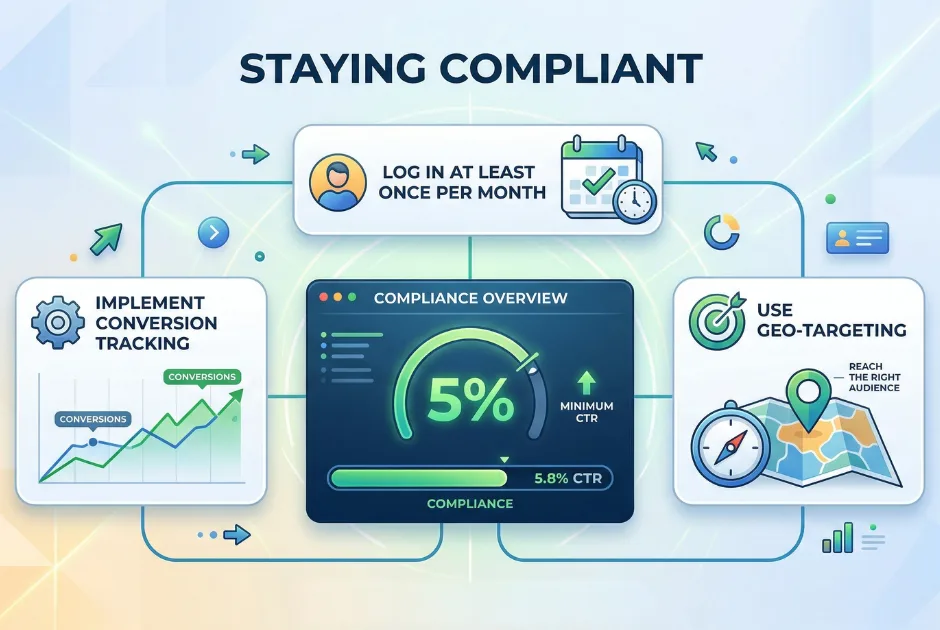
Once approved, maintaining compliance is critical. Many nonprofits lose access to the grant simply because they do not follow ongoing requirements.
You must:
- Log into your account at least once per month
- Maintain a minimum 5% click-through rate (CTR)
- Use relevant, specific keywords (no single-word terms)
- Implement conversion tracking
- Use geo-targeting to reach the right audience
These rules are designed to ensure ads remain useful and relevant to users.
Building Campaigns That Perform
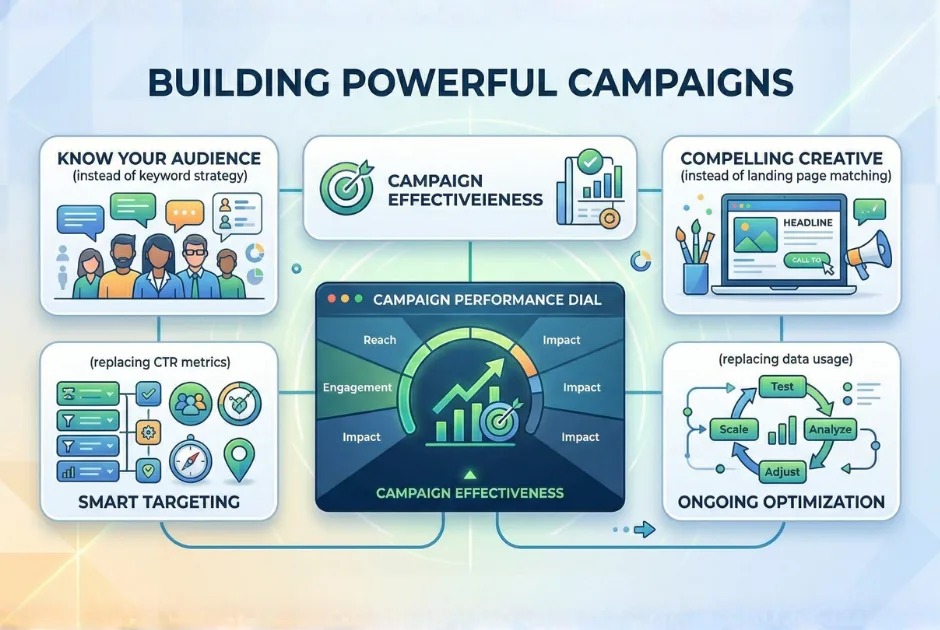
Compliance keeps your account active. Strategy is what drives results.
Start by understanding what your audience is searching for. Focus on intent-driven keywords tied to your mission, programs, or services.
Strong campaigns include:
- Clear, action-oriented headlines
- Simple, direct messaging
- Landing pages that match the ad’s promise
The closer the alignment between search, ad, and landing page, the better your performance will be.
Using Data to Improve Results
Google Ads provides valuable data that can guide your strategy.
Pay attention to:
- Click-through rate (CTR)
- Conversions (donations, sign-ups, etc.)
- Keyword performance
If something is not working, adjust it. If something is performing well, invest more in it.
The goal is continuous improvement, not perfection.
Avoiding Common Mistakes
Many nonprofits struggle with Google Ad Grants because they overlook the basics.
Common issues include:
- Using overly broad or irrelevant keywords
- Ignoring account activity requirements
- Running ads that do not match landing pages
- Failing to track conversions
These mistakes can lead to poor performance or even account suspension.
Make Sure Your Website Supports Your Campaigns
Your ads can only perform as well as your website allows.
A strong nonprofit website should:
- Be mobile-friendly and easy to navigate
- Clearly explain your mission and impact
- Include strong calls to action
- Load quickly and function smoothly
If users click your ad but do not take action, your website is likely the issue.
Final Thoughts
Google Ad Grants is one of the most valuable marketing tools available to nonprofits, but it requires consistent attention and a clear strategy.
When you combine strong targeting, clear messaging, and a well-optimized website, the grant can drive meaningful growth for your organization.
Levitate helps nonprofits stay consistent with communication and follow-up so you can turn website visitors into long-term supporters. Schedule a demo to see how it can support your outreach and maximize the impact of your marketing efforts.