
Mastering Social Media Advertising Campaigns: A Practical Guide
April 9, 2026 · Updated November 13, 2026


Director of Digital Marketing
To run a social media ad campaign that works, start with one clear goal, pick the one or two platforms where your clients already spend time, and write simple ads with a single call to action. Start with a small budget, test a few versions, and put more money behind the ads that bring in real leads. Then follow up quickly, because the ad only starts the relationship.
Why should a small service business use social media ads?
Ads let you reach people in your area who don't follow you yet. Organic posts mostly reach people who already know you. Paid ads help you get in front of new prospects, stay visible, and bring past website visitors back.
Your audience is already there. In Pew Research Center's 2026 survey, 70% of U.S. adults said they use Facebook, 51% use Instagram, and 31% use LinkedIn.
The hard part isn't launching an ad. It's running ads that bring in clients. That comes down to clarity, consistency, and knowing what to focus on.
What should your social media ad campaign goal be?
Pick one goal per campaign before you do anything else. Most platforms ask you to choose one when you set up a campaign, and it shapes who sees your ad.
Common goals for service businesses:
- Awareness: Get your name in front of local people who might need you later.
- Traffic: Send people to a specific page, like a service page or guide.
- Leads: Collect contact details from people who want a quote, consultation, or download.
- Retargeting: Remind people who visited your website or engaged with your page to take the next step.
If you're just starting, leads or retargeting usually tie most closely to new business.
How do you define your target audience for social ads?
If your targeting is off, nothing else matters much. You don't need to know everything about your audience, just enough to make your message feel relevant. Focus on:
- Who they are: Location, age range, and life stage (new homeowners, retirees, small business owners).
- What they need: The problem they're trying to solve or the service they're looking for.
- How they behave: When they're online and what kind of content they engage with.
Keep your service area realistic. A tight local audience is often better than a big one full of people you can't serve.
Which social media platform is best for advertising your business?
Fewer platforms done well beat trying to be everywhere. Start with one or two where your clients are already active:
- Facebook and Instagram: Strong for local businesses, service offers, and retargeting. Both run through Meta's ad tools, so one campaign can cover both.
- LinkedIn: Best for reaching professionals and other businesses, like a CPA targeting business owners or an advisor targeting executives. LinkedIn says its minimum daily budget is $10, and it suggests $25 a day for new advertisers.
- TikTok: Useful for short, creative video and brand awareness, especially with younger audiences.
Once one platform is working, then consider adding another.
Are there ad rules for regulated industries?
Yes, and they matter for many service businesses.
Meta special ad categories. If you advertise housing, employment, credit or other financial products and services, or social issues, elections, and politics, Meta requires you to declare a special ad category. For housing, employment, and credit ads, Meta limits targeting. For example, age options are generally fixed to 18 through 65+, you can't target a specific gender, ZIP code selection is unavailable, and lookalike audiences aren't available. Meta's financial category covers more than credit, so insurance agents and financial advisors should check whether it applies to their ads when they set up a campaign.
Financial advisors. Have your compliance team review every ad before it runs. Never promise returns, and be careful with any client testimonials.
Health care. Chiropractors, dentists, and other providers should never use patient details in ads, and should check HIPAA rules before uploading any patient list for ad targeting.
How do you create social media ads that stop the scroll?
Most ads fail because they look like ads. What works better:
- A simple, clear image or short video. Real photos of your team, your office, or your work usually beat stock images.
- A strong hook. Give people a reason to stop in the first line or first few seconds. Lead with their problem, not your company name.
- Direct copy. Say what you do, who it's for, and what they get, in plain words.
- One clear action. "Book a free consultation" or "Get a quote." Don't make people choose between three options.
Make sure your ad looks and sounds like the rest of your brand. Here's how to create consistent social media branding.
Testing different versions helps, but the basics matter more. If the core message is weak, testing won't fix it.
How much should a small business spend on social media ads?
You don't need a huge budget, but you do need a plan.
- Set the goal first. Your budget should match what you're trying to get, whether that's awareness or leads.
- Start small and test. Run two or three versions of an ad with a modest daily budget and see what works before spending more.
- Give it time. Let a campaign run long enough to gather real results before you change it.
- Shift spend to winners. Put more money behind the ads that bring in leads, and pause the ones that don't.
More money rarely fixes a weak campaign. Fix the message first, then scale.
How often should you run and refresh social media ads?
There's no perfect schedule, but consistency makes a real difference. Instead of chasing "best times":
- Run ads steadily rather than in short bursts.
- Watch when your audience engages, and adjust.
- Refresh images and copy when results start to slip, since people tire of seeing the same ad.
Over time, your own data will be more useful than any general benchmark.
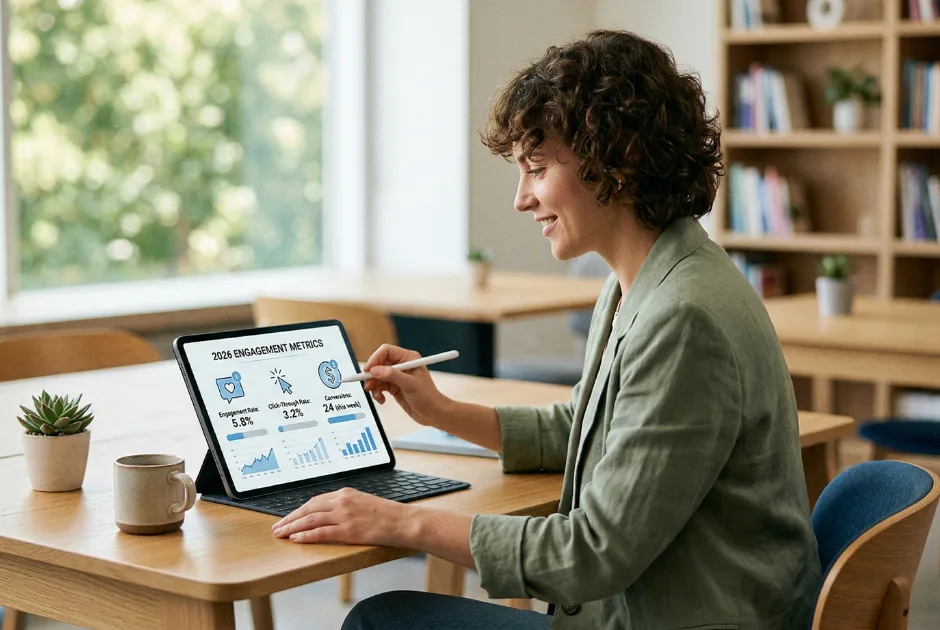
How do you measure whether your social media ads are working?
It's easy to get distracted by likes. Focus on the numbers tied to real business:
- Clicks and engagement: Are people interested?
- Leads or conversions: Are they taking action, like booking a call or filling out a form?
- Cost per result: How much are you paying for each lead or booking?
- Leads that become clients: The number that matters most. Track it in your own records, since the ad platform can't see who signed on.
Check results weekly, and make changes based on trends, not one good or bad day.
What should you do after someone clicks your ad?
This is where many campaigns fall apart. A new lead is a starting point, not a finished sale.
- Reply fast. Reach out the same day if you can, while they still remember you.
- Keep it personal. A short, friendly note works better than a generic sales pitch.
- Stay visible. Keep posting helpful content, so people who click your ad find an active, trustworthy page when they look you up.
For more on the organic side, see this guide to social media marketing for small business and how to create a social media content calendar.
How can Levitate support your social media ads?
If running campaigns yourself sounds like too much, Levitate's ads team can build and run your Facebook ads (and Google Local Service Ads, for eligible businesses) for a flat monthly fee. They design the ads, target people in your area, and track every call, message, and lead. Your ad budget goes straight to Meta and Google, and you can raise, lower, or pause it anytime. Talk with our team about whether managed ads fit your business.
Frequently asked questions
What is the best social media platform for small business ads?
For most local service businesses, Facebook and Instagram are the best place to start because so many people use them and the targeting works well for local audiences. If you mainly serve professionals or other businesses, try LinkedIn.
How much does it cost to advertise on social media?
It depends on the platform, your audience, and your goal. LinkedIn's minimum daily budget is $10, and it suggests $25 a day for new advertisers. Start small, test, and spend more on what works.
How long should a social media ad campaign run?
Give a new campaign enough time to gather meaningful results before you judge it, often at least a couple of weeks. Then keep running what works and refresh the creative when performance drops.
Do I need a separate ad for Facebook and Instagram?
Not always. Meta's ad tools let one campaign run on both, but it helps to check how your image or video looks in each placement and adjust if needed.
Can financial advisors run social media ads?
Yes, but every ad should be reviewed by your compliance team first. Avoid promising returns, follow the rules on testimonials, and check whether your ads fall under a special ad category with targeting limits.