
Chiropractic Marketing Strategies That Work in 2026
December 22, 2025 · Updated November 16, 2026

Vice President of Marketing
The chiropractic marketing strategies that work best are the ones built on relationships: regular, helpful emails to current and past patients, one or two useful social posts a week, a steady flow of Google reviews, and referral partnerships in your community. If you treat personal injury (PI) patients, add a clear PI page, injury-recovery content and professional relationships with attorneys and other providers. Pick a simple plan you can repeat every week, and stick to it.
What marketing works best for chiropractors?
Relationship-based marketing. Your next patients are probably already close by. Some are current patients who need a reminder to come back. Others are friends, family and coworkers of people you've already helped.
Instead of relying only on ads or discounts, focus on staying top of mind with consistent, helpful communication:
- Check-in emails with wellness tips
- Follow-ups after visits with a stretch or care reminder
- A friendly ask for referrals
- Educational posts that answer common patient questions
This builds trust, and trust is what brings return visits and referrals.
How should chiropractors use email to keep patients coming back?
Email is one of the most direct ways to stay connected, but only if it feels personal. Write like you talk to patients in the office.
A few subject lines to try:
- "Quick tip to ease neck tension at your desk"
- "We have openings next week. Need a spot?"
- "Thanks for trusting us. Here's a stretch we love right now."
Send different messages to different groups:
- New patients: A welcome email that explains what to expect and how to book.
- Current patients: A short educational series on posture, mobility and home care.
- Past patients: A friendly "we miss you" check-in.
- Referral partners: Occasional updates on your services and availability.
Keep emails general. A helpful tip or booking reminder doesn't need to mention anyone's diagnosis or treatment.
How should chiropractors use social media?
You don't need to be on every platform or post every day. One or two thoughtful posts a week on Facebook or Instagram is enough to show your expertise and personality. Those are the right places to start: Pew Research Center found that 71% of U.S. adults use Facebook and half use Instagram.
How do you set up your social profiles?
Your profile is often a patient's first impression. Make sure each one has:
- A clear, professional photo or logo
- A bio that says who you are, what you treat and where you're located
- Your phone number, website and booking link
- A pinned post with your most important info, like new services or hours
What should a chiropractor post?
Aim for posts that are helpful and human, not salesy:
- Behind-the-scenes looks at your clinic and team
- Quick mobility tips or stretches (short videos work well)
- Answers to common questions, like "Is it normal to feel sore after an adjustment?"
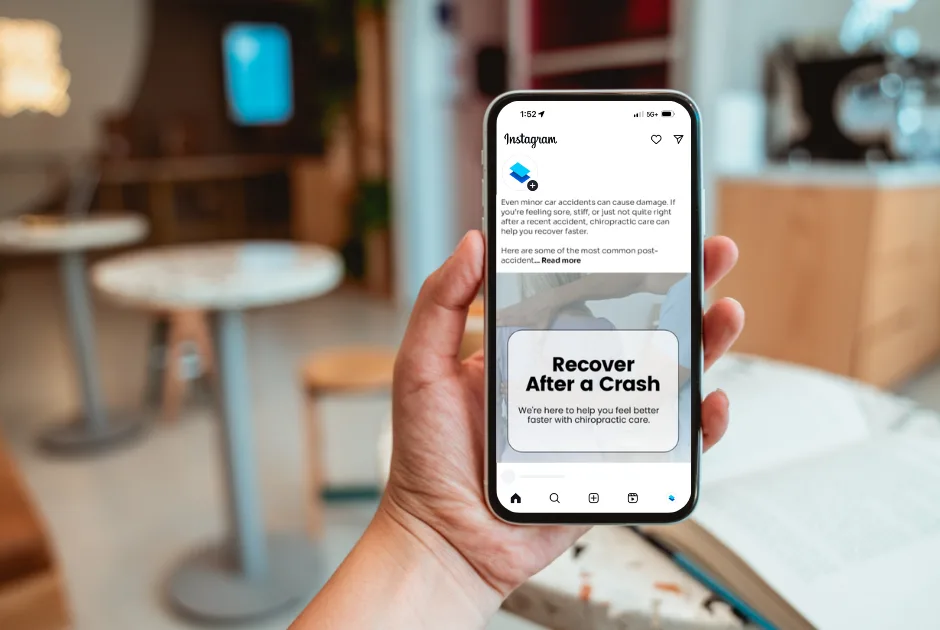
- Recovery tips after a car accident or sports injury
- Polls and Q&A sessions that invite people to comment
Weekly themes make planning easier. Try "Wellness Wednesday" for health tips or "Myth-Busting Monday" for common questions.
How do you keep social media HIPAA-safe?
Reply to comments and messages quickly, but never discuss a person's care in public. If someone asks about their treatment in a comment, invite them to call the office.
Only share patient stories, photos or video testimonials after you have the patient's written authorization. HIPAA requires it before you use health information in marketing.
To make the most of your posts, you can also put a small budget behind them. Here's how to use Facebook ads for chiropractic marketing.
How do you market a chiropractic practice to personal injury patients?
PI patients are in a different spot than typical wellness patients. They're often in pain, stressed and dealing with insurance claims or a legal case at the same time. They want care, but they also want guidance.
The need is large. NHTSA estimates that about 2.44 million people were injured in U.S. motor vehicle crashes in 2023.
What should a PI chiropractor's website include?
Most PI patients start their search online, so your website needs to make your PI focus obvious. Include:
- A dedicated personal injury page that explains the injuries you treat, like whiplash and soft tissue injuries
- What to expect at the first visit and during treatment
- Your credentials and experience with accident recovery
- Clear contact info and a fast way to book
Add helpful articles that answer the questions accident patients ask, such as:
- What should I do after a car accident?
- How does chiropractic care help with whiplash recovery?
- How do insurance claims work for chiropractic care after an accident?
What search terms do PI patients use?
People look for help nearby, in plain language. Use phrases like "car accident chiropractor near me," "chiropractor after car accident" and "whiplash chiropractor" naturally on your PI page. Keep your Google Business Profile complete and up to date so you show up in local results. This guide explains how local rankings work.
How do you build PI referral relationships?
Referrals are one of the best sources of PI patients. Build relationships with professionals who see injured people every week:
- Personal injury attorneys
- Primary care doctors and urgent care clinics
- Physical therapists and massage therapists
Meet them in person, offer a short lunch-and-learn on how chiropractic care supports recovery, and keep them updated by email.
Keep these relationships above board. Rules on patient solicitation and paying for referrals vary by state, so check with your state board and a healthcare attorney before starting a referral program.
How do chiropractors get more Google reviews?
Your Google Business Profile, and the reviews on it, play a big role in local choices. Google says customers are 2.7 times more likely to consider a business reputable when they find a complete Business Profile on Search and Maps.
Ask every patient after a visit, not just the ones you think will leave five stars. Google's policy says businesses must not "selectively solicit positive reviews from customers" or offer incentives for reviews. The FTC's 2024 rule also bans rewards tied to positive reviews.

When you reply, thank the reviewer but don't confirm they're a patient or mention their care. In 2022, HHS reached a $23,000 settlement with a dental practice that shared patient details in replies to online reviews. The same rules apply to chiropractors covered by HIPAA.
How can community involvement bring in new patients?
Digital marketing matters, but local presence still counts. Showing up in person helps people get to know you before they need care.
- Host a workshop on injury prevention or posture at a gym or library
- Set up a booth at a local health fair
- Sponsor a youth sports team
- Partner with local businesses on wellness events for their employees
How do you know if your chiropractic marketing is working?
Track a few simple numbers each month:
- Calls and website visits from your Google Business Profile
- Form fills and online bookings
- Email replies and opens
- New Google reviews
- How new patients heard about you (ask on your intake form)
When a topic or channel brings in patients, do more of it. When something isn't working after a few months, change one thing at a time.
How do you build a marketing plan you can stick to?
The best plan is the one you'll keep doing. Don't try to fix everything at once. Start with one change, like a monthly patient email or two social posts a week, and do it consistently for 90 days before adding more.
How can Levitate help your practice stay consistent?
Every strategy above works only if you keep it up, and that's hard when your schedule is full of patients. Levitate's email automations send personal notes from your own Gmail or Outlook account for follow-ups, birthdays and check-ins, using ready-made content written for chiropractic practices. Your outreach keeps going during your busiest weeks.
Ready to turn a few good intentions into a steady routine? Book a demo and see how Levitate keeps your patient outreach on track.
Frequently asked questions
How much should a chiropractor post on social media?
One or two helpful posts a week is enough for most practices. Consistency matters more than volume.
Is it OK to share patient testimonials on social media?
Only with the patient's written authorization. HIPAA requires it before you use a patient's health information in marketing, and that includes stories, photos and videos.
What is the best way to get personal injury patients?
Combine a clear PI page on your website, local search visibility and professional referral relationships with attorneys and other providers. Check your state's rules on solicitation and referral fees first.
Can chiropractors offer a discount for Google reviews?
No. Google bans incentives for reviews, and the FTC's 2024 rule bans rewards tied to positive reviews. Ask every patient the same way.