We've recently updated our Terms of Service and Privacy Policy.

For construction businesses, a website is often the first place prospective clients go to decide whether your company is worth contacting. They want to see your work, understand your services, and feel confident that your team can handle their project.
In 2026, successful construction marketing websites do more than look professional. They help build trust, generate leads, and make it easy for visitors to take the next step.
When someone lands on your website, they should quickly understand what your business does, who you serve, and where you work. A strong homepage should make your value clear within seconds.
Your website should clearly communicate:
Avoid vague messaging or overly technical language. Prospective clients are often comparing multiple contractors, so clarity can help your business stand out quickly.
Construction companies often offer multiple services, so your website should be organized in a way that helps visitors find what they need quickly.
Instead of relying on one general services page, consider creating separate pages for your most important offerings, such as:
This helps prospective clients find relevant information more easily. It can also support SEO by giving search engines clearer content about what your business offers and where you provide those services.
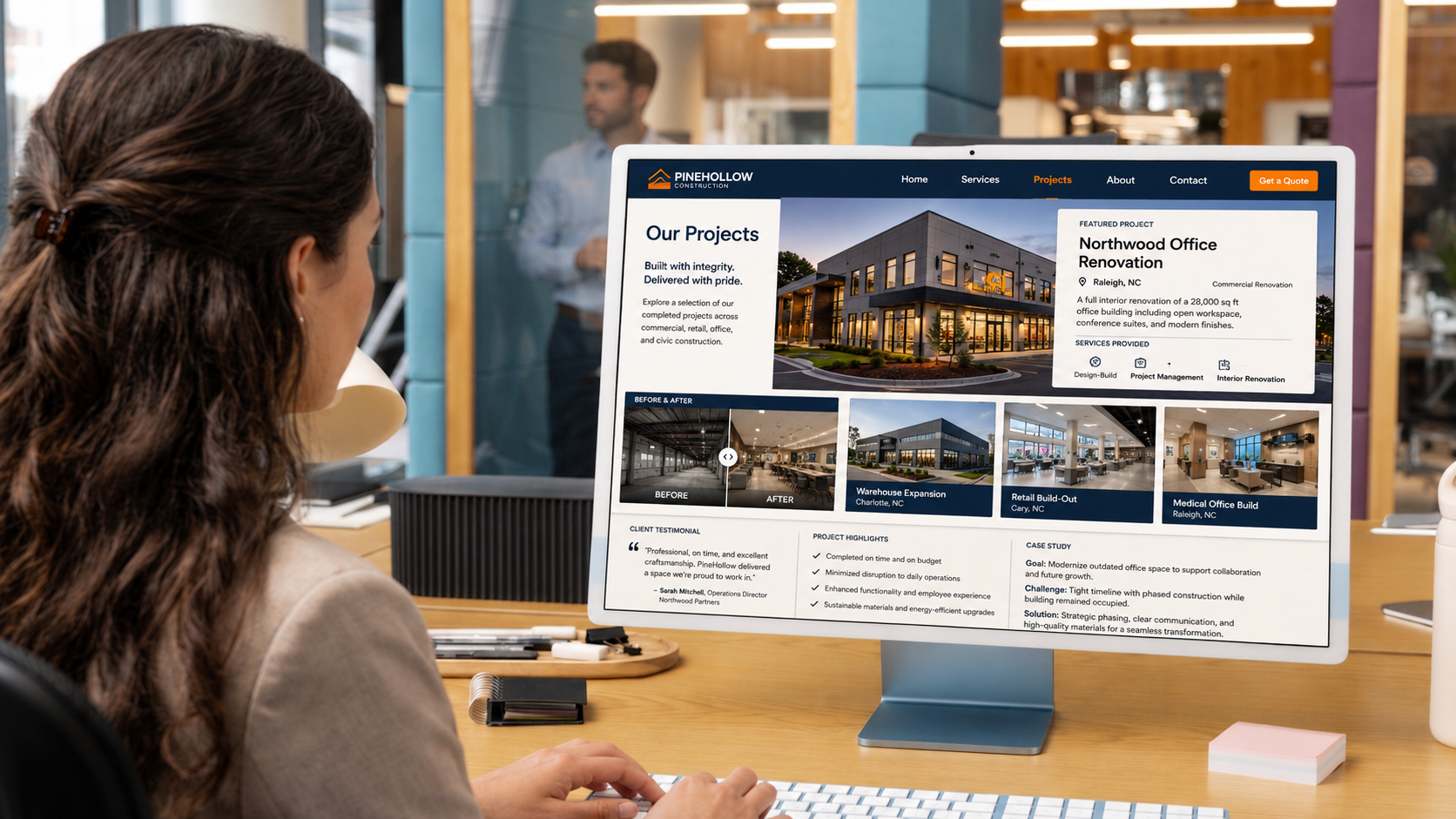
Construction is a visual industry. Prospective clients want to see proof of your capabilities before they reach out.
Your website should include strong examples of completed projects through project galleries, before-and-after photos, case studies, and detailed project descriptions. Instead of only showing finished photos, consider adding context around the project, such as the client’s goal, the challenge your team solved, or the type of materials and process involved.
A strong project page may include:
Strong visuals help visitors imagine what it would be like to work with your company. They also build credibility by showing real examples of completed work.
Construction projects often require significant investment, so trust is essential. Your website should help reassure visitors that your company is professional, reliable, and experienced.
Trust-building elements may include:
These details help reduce hesitation and give prospective clients more confidence before they contact your team.
A construction marketing website should guide visitors toward action. Whether you want them to request a quote, schedule a consultation, call your office, or view your project gallery, the next step should be obvious.
Use direct calls-to-action such as:
Place calls-to-action throughout your site, especially on your homepage, service pages, and project pages. Visitors should never have to search for how to contact you.
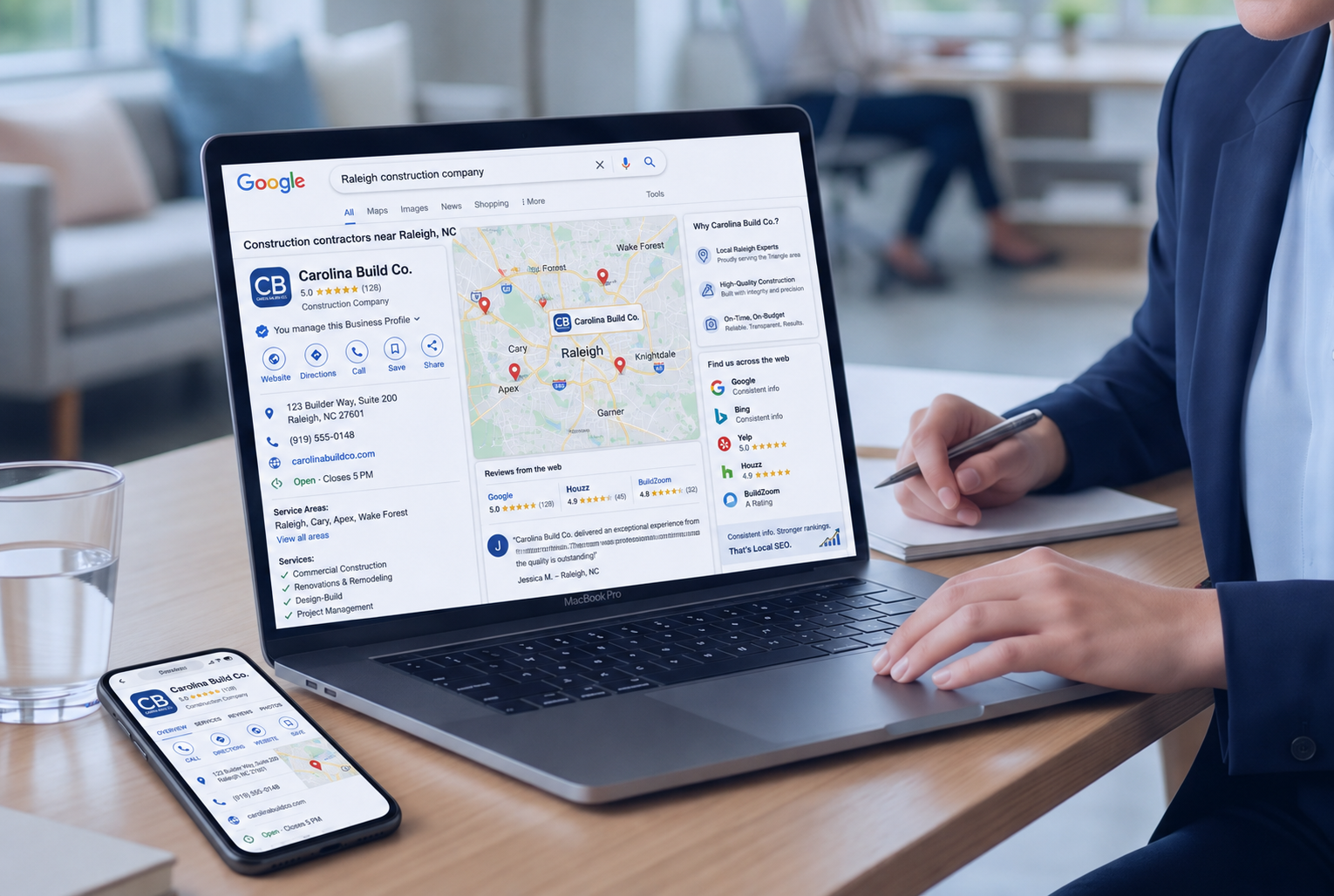
Many construction clients search for companies in their area, making local SEO an important part of website performance.
Your website should include location-specific language where it makes sense, especially on service pages and contact pages. It’s also helpful to keep your business name, address, phone number, and service areas consistent across your website and online listings.
Local SEO works best when your website connects with the rest of your online presence, including your Google Business Profile, online reviews, and directory listings.
Many visitors will view your website from a phone. If your site loads slowly, is difficult to navigate, or has hard-to-read text, potential clients may leave before contacting you.
A mobile-friendly construction website should:
Since construction decisions often involve multiple touchpoints, a smooth mobile experience can make it easier for prospects to return to your site later.
Your website should support the rest of your marketing efforts. Digital ads, social media posts, email campaigns, online listings, and review requests should all point people back to a website that clearly communicates your value.
For example, if you run ads for remodeling services, those ads should lead to a relevant remodeling page rather than a generic homepage. If you share completed projects on social media, your website should give visitors an easy way to explore similar work and contact your team.
When your website works together with your online presence and communication strategy, it becomes a stronger marketing asset.
A strong website can help generate leads, but long-term growth depends on what happens next.
After someone reaches out, timely and professional follow-up matters. Clear communication, project updates, and post-project check-ins can help turn an initial inquiry into a stronger client relationship.
Construction companies can stay connected through:
Your website may start the conversation, but consistent communication helps continue it.
A successful construction marketing website should help your business attract prospects, build trust, and create opportunities for new projects.
Levitate helps construction businesses strengthen their online presence through professional websites, online presence management, digital advertising, email, texting, and social media communication. From helping prospects find your business online to staying connected after an inquiry or completed project, Levitate makes it easier to support the full customer journey.
With dedicated support from a Success Specialist, Levitate also helps businesses stay consistent with their marketing efforts without adding more work to their day.
If you’re looking for a better way to build your online presence, attract more prospects, and turn website visitors into stronger client relationships, book a demo to see how Levitate can help your construction business grow.
We’ll give you a call to set up time for your team and ours to meet virtually for a personalized demo.
Book a Demo


.png)
%20(1).png)
.svg)
.svg)